

The Truth About Glowing Skin and Why Healthy Skin Matters More Than Shine
Glowing skin has been sold as a finish. Dewy. Glassy. Lit from within. Reflective enough to catch the light in every photo.
Real skin health is quieter than that. It looks comfortable, calm, resilient, and well supported. It moves. It has pores. It may have freckles, texture, pigmentation, fine lines, oil, dryness, and the occasional break-out. None of those things automatically mean skin is unhealthy.
The trouble starts when “glow” gets confused with shine. Shine can come from oil, heat, sweat, heavy product, irritation, or a layer of pearlescent makeup. A healthy glow comes from skin that holds water well, sheds evenly, keeps its barrier strong, and recovers without constant drama.
That difference matters because chasing shine can lead to over-exfoliating, layering too many actives, skipping moisturiser, or treating every visible pore as a problem. The result often looks bright for a day, then angry for a week.
The better goal is healthy glowing skin that feels as good as it looks.
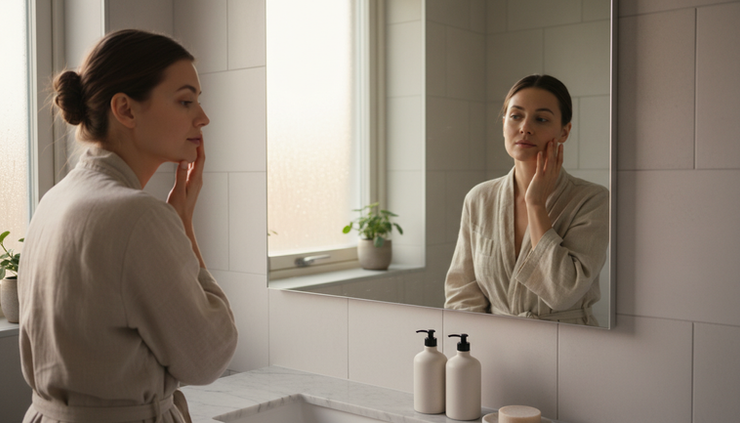
Shine and glow are not the same thing
Shine sits on the surface. Glow starts with the condition of the skin.
That surface shine can come from many places:
Sebum collecting on the skin
Sweat after heat or exercise
Rich moisturiser that has not absorbed
Facial oils sitting on top of makeup
Irritation after strong exfoliation
Highlighter, shimmer, or reflective sunscreen
None of those are bad on their own. Sebum protects the skin. Sweat helps cool the body. A richer cream may be exactly what dry skin needs. The issue is the assumption that a shiny finish means the skin underneath is thriving.
Healthy skin has a different set of clues. It often feels:
Comfortable after cleansing
Flexible rather than tight
Hydrated without feeling greasy
Less reactive to ordinary products
Able to recover from minor dryness or break-outs
More even in tone and texture over time
Texture also deserves a fairer reputation. Skin is not meant to look poreless. Pores are normal. Fine lines are normal. Some uneven tone is normal, especially in Australia where UV exposure is high for much of the year.
A glow that relies on stripping, scrubbing, or stinging is usually a warning sign. Skin can look glossy after aggressive treatments because the surface has been polished too hard. That can leave the barrier exposed, which may lead to redness, sensitivity, flaking, burning, or break-outs.
A simple test helps: after washing your face with a gentle cleanser, does your skin feel calm within a few minutes, or does it feel tight, hot, or desperate for product? Healthy skin should not feel like it is in distress once the shine is gone.
Your skin barrier does more for radiance than any highlighter
The skin barrier is the outer layer that helps keep water in and irritants out. When it works well, skin tends to look smoother and more settled. When it struggles, skin often becomes dull, flaky, oily in patches, red, or sensitive.
A damaged barrier can confuse the whole routine. Products that once felt fine may suddenly sting. Makeup may cling to dry areas. Oil can increase because the skin is trying to protect itself. People often respond by adding more treatments, which can make the cycle worse.
Signs your barrier may need support include:
Stinging from gentle products
Flaking around the nose, mouth, or cheeks
Redness that lingers
Tightness after cleansing
Break-outs mixed with dryness
A shiny surface that still feels dehydrated underneath
Barrier care is not glamorous, but it works. Start with fewer products and focus on consistency. A good routine does not need to feel dramatic to be effective.
The core routine looks like this:
Morning | Evening |
Gentle cleanse or rinse | Gentle cleanse |
Antioxidant if tolerated | Treatment product if needed |
Moisturiser | Moisturiser |
Broad-spectrum SPF 30+ or higher | Barrier-supporting cream when skin feels dry |
The words “if tolerated” matter. Skin does not become healthier because it endures discomfort. Some active ingredients can tingle at first, but burning, swelling, peeling, or ongoing redness are signs to stop and reassess.
Look for moisturising ingredients that support hydration and comfort. Glycerin, hyaluronic acid, ceramides, niacinamide, panthenol, and squalane are common examples. Not every product needs every ingredient. The aim is to help the skin hold water and reduce stress.
Radiance comes from water, oil balance, and even renewal
Skin looks dull when it cannot reflect light evenly. That does not mean it needs to be made shiny. It may need better hydration, smoother texture, less congestion, or a calmer barrier.
Think of the difference between dry soil and well-watered soil. Water changes the surface. It makes it look richer and more alive. Skin behaves in a similar way. When the outer layer holds water well, it reflects light more softly and evenly.
Hydration and oil are different. Dehydrated skin lacks water. Dry skin lacks oil. Oily skin can still be dehydrated. That is why a person can feel greasy by lunch and tight after cleansing. Treating that with harsh foaming cleansers often makes the problem worse.
A more balanced approach helps:
Use lukewarm water rather than hot water
Choose a gentle cleanser that does not leave skin squeaky
Apply moisturiser while skin is slightly damp
Avoid layering many exfoliating acids at once
Give new products time before judging the result
Keep sunscreen consistent, especially under Australian UV conditions
Cell turnover also plays a role. The skin naturally sheds dead cells, but this process can slow or become uneven. Gentle exfoliation can help some skin types look fresher. Too much exfoliation can do the opposite.
Chemical exfoliants such as lactic acid, glycolic acid, or salicylic acid can be useful, depending on the concern. Lactic acid may suit dryness and dullness. Salicylic acid can help oiliness and clogged pores. Glycolic acid can smooth texture for some people, though it may be too strong for sensitive skin.
The safest rule is simple: do less, but do it regularly. One exfoliant once or twice a week often beats several exfoliating products used without a plan.
Retinoids can also improve skin texture and tone over time. They are widely used in anti ageing skincare because they support smoother-looking skin and more even renewal. They can also irritate if introduced too fast. Start low, use them at night, buffer with moisturiser if needed, and wear sunscreen daily.
The products that support glow usually do not look exciting
The products that make the biggest difference are often the least flashy. Cleanser, moisturiser, sunscreen, and one targeted treatment can outperform a crowded shelf.
A thoughtful routine might include a vitamin C serum in the morning if the skin tolerates it. Vitamin C is popular because it helps support brighter-looking skin and pairs well with sunscreen in a morning routine. It does not replace sunscreen. It also does not need to tingle or smell strong to be useful.
Sunscreen is the non-negotiable step in Australia. UV exposure contributes to pigmentation, uneven tone, rough texture, fine lines, and loss of firmness. A broad-spectrum SPF 30+ or higher, used generously and reapplied when needed, protects the work every other product is trying to do.
The best sunscreen is the one that gets used every day. Some prefer a light fluid. Others need a richer cream. Tinted formulas can help even out visible tone while adding protection. The finish matters because comfort drives consistency.
For people comparing skincare Australia options, including brands such as SkinCeuticals Australia or clinics such as Pt78 Skin and Body, the same rule applies: choose products by skin need, not by hype.
A strong routine answers these questions:
What is the main concern?
Is the skin barrier calm enough for actives?
Which product does the heavy lifting?
Is sunscreen being used properly?
Can the routine be repeated most days?
If the routine has ten steps but no clear purpose, it becomes hard to know what helps and what irritates. If the skin improves only when three products are removed, that is useful information.

Lifestyle shows up on the skin, but it is not a moral scorecard
Skin responds to sleep, stress, food, hormones, medication, weather, illness, and genetics. That does not mean every skin concern can be fixed by drinking more water or sleeping better.
The “glow from within” phrase can become unfair when it suggests that dullness, acne, sensitivity, or pigmentation are personal failures. They are not. Skin is part of a living body. It changes.
Still, daily habits can support the skin’s ability to function.
Sleep matters because the body repairs itself during rest. Poor sleep can make skin look more tired or less even. Stress can worsen flare-ups for some people. Alcohol can contribute to dehydration and redness in some skin types. A diet that consistently lacks variety may affect general health, which can show on the skin too.
The useful approach is not perfection. It is pattern recognition.
Notice what shifts your skin:
Does it flush after spicy food or alcohol?
Does dryness worsen in winter or after air-conditioning?
Do break-outs appear around menstrual cycles?
Does your skin sting after swimming in chlorinated water?
Does your sunscreen suit daily wear, or do you avoid it because it feels heavy?
These observations help more than chasing trends. They also give a skin therapist, GP, or dermatologist better information if professional support is needed.
Some concerns deserve medical advice, especially sudden rashes, painful cystic acne, persistent redness, changing moles, or pigmentation that appears quickly. This article is general information only and does not replace personal medical advice.
A healthy glow is built by removing stress from the routine
Many people do not need more products. They need fewer irritants, more patience, and a clearer plan.
A reset can help when skin feels confused. For two to three weeks, keep the routine basic:
Gentle cleanser
Moisturiser
Sunscreen in the morning
No scrubs
No strong acids
No new active ingredients
No picking at flaky or congested areas
This gives the barrier time to settle. Once the skin feels calm, add one targeted product at a time. Use it for long enough to see a pattern. If irritation starts, pause rather than pushing through.
The goal is steady improvement, not a dramatic overnight change. Skin that glows in a healthy way usually gets there through small habits repeated often.
A good routine should feel sustainable. It should suit the climate, budget, skin type, and daily life. It should still work on busy mornings. It should not require burning, peeling, or constant anxiety.
The clearest sign of progress is not mirror-like shine. It is skin that feels comfortable, looks more even, and behaves more predictably.

The truth about glowing skin is simpler than the marketing suggests. Shine can be added in seconds. Health takes care, consistency, and respect for the skin barrier.
Choose comfort before intensity. Choose sunscreen before trends. Choose one useful active before five exciting ones. Let texture be normal. Let pores exist. Let skin look like skin.
That is where real radiance begins.


Comments