

The Skincare Ingredients to Know in 2026: Vitamin C, Retinol, Hyaluronic Acid, Peptides and Niacinamide

The best skincare routines in 2026 are not crowded. They are considered. A well-made cleanser, a reliable moisturiser, daily sunscreen and a few proven actives can do more for the skin than a bathroom shelf full of half-used formulas.
Ingredient literacy matters because skincare has become noisy. New textures, new claims and new “must-have” products appear constantly, but the ingredients with staying power tend to be the ones with a clear role. Vitamin C, retinol, hyaluronic acid, peptides and niacinamide remain central because they answer the concerns many people return to again and again: dullness, uneven tone, fine lines, dehydration, texture, redness and barrier stress.
For an Australian routine, the standard is even higher. UV exposure is a daily reality, seasons can swing between dry heat and humidity, and sunscreen is not optional. That context shapes how these ingredients should be used.
This guide takes a calm, practical look at the key actives to understand now, including where vitamin C serum, retinol, hyaluronic acid, peptides, niacinamide and brands such as SkinCeuticals fit into a modern routine.
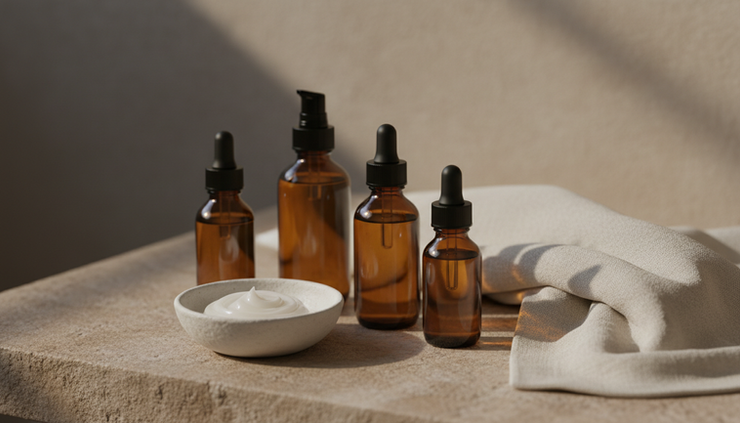
Ingredient literacy is the quiet luxury of skincare in 2026
A refined routine does not chase every new launch. It uses the right ingredients at the right time, at the right strength, and with enough consistency to let skin respond.
That matters because many active ingredients overlap. Some support brightness. Some soften the look of fine lines. Some help the skin barrier feel more comfortable. Using too many at once can turn a promising routine into a cycle of irritation and recovery.
The most important question is not “what is trending?” It is “what does this ingredient do, and does my skin need it?”
A considered routine usually has three layers:
Protection Sunscreen, antioxidants and barrier support.
Correction Ingredients that target tone, texture, congestion or signs of ageing.
Recovery Hydration, moisturising ingredients and calming support.
Most people do not need every active every day. The strongest routines often rotate ingredients with care. This is especially true with retinol, exfoliating acids and potent antioxidant formulas.
The Australian context also matters. UV exposure contributes to pigmentation, collagen breakdown and uneven tone. That makes daily broad-spectrum SPF a non-negotiable partner for almost every ingredient in this guide.
This information is general education only. For persistent irritation, acne, pigmentation, rosacea, eczema, pregnancy-safe routines or medical skin concerns, advice from a qualified health professional or skin therapist is best.
Vitamin C and niacinamide are the daily brightening pair to understand
Vitamin C and niacinamide are often discussed together because both sit comfortably in the “daytime support” category. They are not identical, but they can work beautifully in a routine when chosen well.
Vitamin C serum supports radiance and antioxidant care
A good vitamin C serum remains one of the most useful products in modern skincare. It is best known for supporting a brighter-looking complexion and helping defend against environmental stressors. It is often used in the morning, beneath moisturiser and sunscreen.
Vitamin C is popular for a reason. Research supports its role as an antioxidant, and it is widely used in routines that target uneven tone, dullness and visible signs of sun exposure. It also plays a role in collagen synthesis, though no serum should be treated as a substitute for sun protection, sleep, nutrition or professional advice.
The challenge is formulation. Vitamin C can be unstable, particularly in certain forms and packaging. It may oxidise when exposed to air, heat and light. That is why many premium formulas use opaque or tinted packaging, careful pH levels and supporting antioxidants.
SkinCeuticals is often part of this conversation because the brand is known internationally for antioxidant serums and evidence-led formulation. In a professional skincare setting, products like these are usually discussed in terms of suitability, tolerance and how they fit with the rest of the routine, rather than as a one-size-fits-all answer.
A vitamin C serum may be a good fit if the skin looks tired, uneven or sun-stressed. Sensitive skin may need a lower-strength formula or a gentler vitamin C derivative.
Niacinamide is the steady barrier-supporting multitasker
Niacinamide, a form of vitamin B3, has become a staple because it is versatile and generally well tolerated. It can support the skin barrier, help improve the look of uneven tone, reduce the appearance of excess shine and calm the feel of stressed skin.
It is not as dramatic in reputation as retinol or vitamin C, but it earns its place by being steady. Many moisturisers and serums now include niacinamide because it pairs well with a wide range of ingredients.
For skin that feels reactive, oily, dehydrated or uneven, niacinamide can be a sensible place to start. It also fits well into Australian routines because barrier support is essential when sunscreen, active serums, air-conditioning, heat and changing weather all play a role.
The main caution is strength. More is not always better. Some people find high-percentage niacinamide formulas irritating, especially when layered with multiple actives. A balanced formula used consistently is usually a more elegant choice.
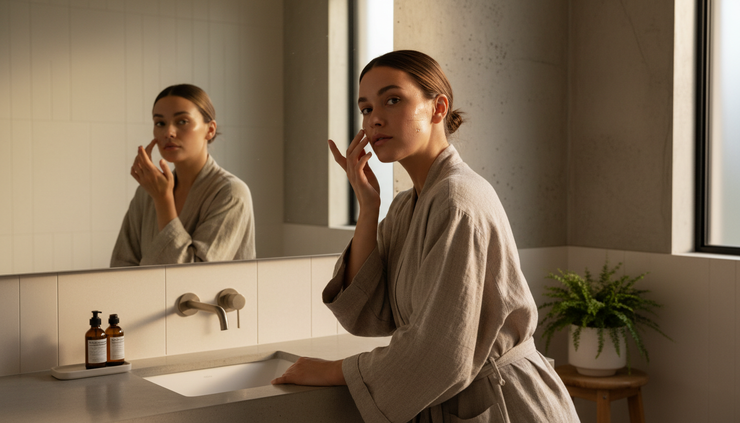
Retinol and peptides are the long-game ingredients
Some ingredients are about instant comfort. Retinol and peptides are more about patience. They belong in routines focused on texture, firmness and visible signs of ageing, but they work in very different ways.
Retinol helps refine texture and visible signs of ageing
Retinol is part of the retinoid family, which is widely respected in skincare. It is used to support skin renewal, improve the look of uneven texture and soften the appearance of fine lines over time.
It can be very effective, but it asks for discipline. Retinol is not the ingredient to begin on a whim the night before an event. It can cause dryness, flaking or sensitivity when introduced too quickly. The skin often needs time to adjust.
A sensible approach looks like this:
Start with a low strength.
Use it two or three nights a week at first.
Apply moisturiser before or after if the skin is prone to dryness.
Avoid layering it with strong exfoliating acids in the same routine unless advised.
Use sunscreen every morning.
Retinol is usually best used at night. It should generally be avoided during pregnancy and breastfeeding unless a doctor advises otherwise.
The most common mistake is treating irritation as proof that the product is working. A little adjustment can happen. Ongoing stinging, peeling or redness is a sign to pause, repair the barrier and reassess the formula or frequency.
For skincare Australia-wide, retinol also needs to be thought of alongside sun exposure. If sunscreen is inconsistent, retinol is not the right next step. Protection comes first.
Peptides support a firmer-looking, more resilient complexion
Peptides are short chains of amino acids, the building blocks of proteins in the skin. In topical skincare, they are often used to support a smoother, firmer-looking complexion and improve the feel of skin resilience.
They are generally gentler than retinol, which makes them appealing for people who want age-supportive skincare without the adjustment period of stronger actives. Peptides also sit well in moisturisers, eye creams and serums.
Not all peptides do the same thing. Different peptide complexes are designed with different cosmetic goals in mind. This is where formulation matters more than a single ingredient name on a label.
Peptides can be useful if the skin looks tired, dry or less bouncy, or if retinol is not suitable. They are also a good supporting ingredient on non-retinol nights.
Think of peptides as part of a strengthening routine. They are not usually the dramatic lead actor, but they can make the whole routine feel more complete.
Hyaluronic acid is simple, but often misunderstood
Hyaluronic acid is one of the most recognisable skincare ingredients, but it is also one of the most over-promised. Its main role is hydration. It helps attract and hold water in the skin’s surface layers, which can make the complexion look plumper, fresher and more comfortable.
That makes it valuable, especially for skin that feels tight, dehydrated or dull. Still, hyaluronic acid is not a complete moisturiser on its own. It works best when paired with ingredients that help seal in hydration, such as ceramides, fatty acids, squalane or a well-formulated moisturiser.
In dry climates, air-conditioned rooms or winter weather, applying hyaluronic acid without a moisturiser over the top can leave some skin feeling tight. The fix is simple. Apply it to slightly damp skin, then follow with a cream or lotion that suits your skin type.
Hyaluronic acid can also make active routines easier to tolerate. If vitamin C feels a little drying or retinol causes tightness, a hydrating serum or moisturiser can help support comfort.
It suits most skin types, but texture matters. Oily skin may prefer a light gel serum. Dry skin may do better with a richer cream that includes hyaluronic acid as one part of a broader moisturising blend.
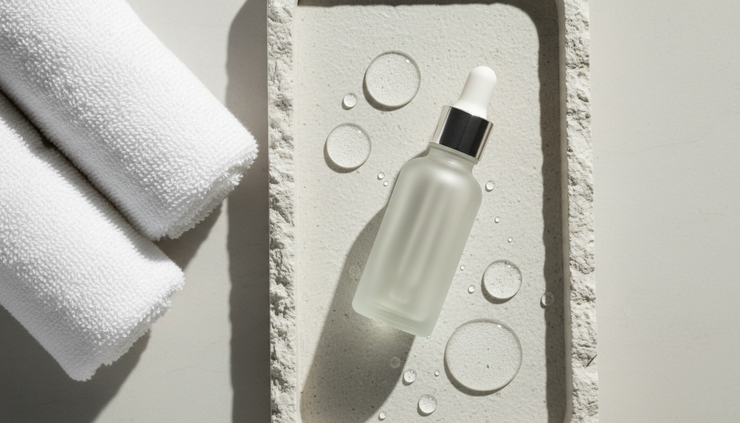
How to build a balanced routine around these ingredients
A good routine does not need to use vitamin C, retinol, hyaluronic acid, peptides and niacinamide all at once. The art is placement.
Here is a simple way to think about it.
Routine step | Morning | Evening |
Cleanse | Gentle cleanse or rinse | Cleanse to remove sunscreen and build-up |
Treat | Vitamin C serum or niacinamide | Retinol on selected nights, peptides or niacinamide on recovery nights |
Hydrate | Hyaluronic acid if needed | Hyaluronic acid if the skin feels dry or tight |
Moisturise | Lightweight or richer moisturiser | Barrier-supportive moisturiser |
Protect | Broad-spectrum SPF | Not needed |
This structure keeps the routine clear. Morning focuses on protection and brightness. Evening focuses on renewal and repair.
SkinCeuticals and other professional skincare brands often sit in the treatment step, where formulation quality makes a visible difference to feel, stability and tolerance. The best choice is still the one that suits the skin in front of you.
A few practical rules make active ingredients easier to live with:
Introduce one new active at a time This makes it much easier to identify what is helping and what is irritating.
Give products enough time Hydration can feel immediate. Changes in texture, tone and fine lines usually need consistent use over weeks or months.
Do not skip moisturiser Even oily skin needs barrier support.
Separate strong actives when needed Retinol and exfoliating acids can be too much in one routine for many people.
Respect the skin barrier Tight, shiny, stinging skin is not “glowing”. It is often stressed.
Use sunscreen daily Without SPF, brightening and age-supportive routines are working against unnecessary UV damage.
What to prioritise by skin goal
A calm routine starts with the main concern, not the most popular ingredient.
If the concern is dullness or uneven tone, vitamin C serum in the morning is a strong starting point. Niacinamide may support a more even-looking complexion and improve comfort.
If the concern is fine lines or texture, retinol is often the active to build towards. Peptides can support the routine, especially on non-retinol nights.
If the concern is dehydration, hyaluronic acid can help, but it should sit beneath a moisturiser that locks hydration in.
If the skin is sensitive or easily flushed, niacinamide, peptides and barrier-supportive moisturisers may be better first steps than a strong retinol or acidic vitamin C.
If the routine already contains several actives and the skin feels unsettled, the best upgrade may be subtraction. Pause, simplify, repair, then reintroduce slowly.

The Pt78 Skin and Body takeaway
The most important skincare ingredients of 2026 are not new for the sake of being new. They have stayed relevant because they serve clear roles.
Vitamin C supports radiance and antioxidant care. Retinol helps refine the look of texture and ageing over time. Hyaluronic acid brings hydration when used correctly. Peptides support a firmer, more resilient-looking complexion. Niacinamide helps steady the barrier and improve the look of uneven tone.
The most elegant routine is the one your skin can tolerate and repeat. Choose fewer products, use them well, and let consistency do its quiet work.


Comments