

Oxidative Stress and Your Skin Why It Matters
Skin is built to protect you. It deals with sunlight, air pollution, heat, cold, stress, and the daily business of being alive. Most of the time, it handles this quietly. But when the pressure builds faster than your skin can defend itself, oxidative stress can start to show up as dullness, rough texture, uneven tone, fine lines, sensitivity, and slower-looking recovery.
Oxidative stress sounds like a chemistry lesson, but the idea is simple. Your skin has natural defence systems. Environmental and internal stressors create unstable molecules called free radicals. When there are too many free radicals and not enough antioxidants to keep them in check, the balance tips.
That imbalance matters because skin is visible, exposed, and constantly renewing itself. Understanding oxidative stress helps explain why sun protection, antioxidants, sleep, and a steady routine often matter more than chasing every new skincare trend.
What oxidative stress actually is
Oxidation is a normal process. It happens everywhere, including inside the body. A sliced apple browns when exposed to air. Metal rusts when oxygen and moisture react with it. Skin has its own version of this process, although it is far more complex and biologically controlled.
Free radicals are molecules with an unpaired electron. Because they are unstable, they look for another electron nearby. In skin, they can interact with lipids, proteins, and DNA. Your body is not helpless against them. It uses antioxidants to neutralise free radicals and help maintain balance.
The problem starts when free radical activity outpaces antioxidant protection.
Common sources include:
UV radiation
Sun exposure is one of the biggest contributors. UVA rays are especially linked with deeper skin ageing changes, while UVB rays are strongly linked with sunburn.
Air pollution
Smoke, traffic-related pollution, and particulate matter can add oxidative load to the skin’s surface.
Heat and visible light
Heat and some forms of visible light can add to skin stress, especially for skin prone to pigmentation.
Lifestyle strain
Poor sleep, high ongoing stress, smoking, and a low-nutrient diet can affect how well the body manages oxidative load.
Normal metabolism
The body naturally produces free radicals during energy production. This is expected and not automatically harmful.
A useful way to think about oxidative stress is as a balance scale. Free radicals sit on one side. Antioxidant defences sit on the other. Skin looks and behaves better when the scale stays relatively balanced.
Why your skin is especially exposed
Skin is not tucked away. It is your outer barrier, so it meets the world first.
The outermost layer, the stratum corneum, works like a brick wall. Skin cells are the bricks, and lipids are the mortar. This wall helps keep water in and irritants out. Oxidative stress can affect the quality of that wall, especially when it combines with barrier damage from over-exfoliation, harsh cleansing, or too much sun.
Below the surface, oxidative stress can also affect collagen and elastin. These proteins help skin stay firm, smooth, and resilient. Collagen naturally changes with age, but UV exposure and free radical activity can speed up visible ageing. This is one reason daily sunscreen is not just about avoiding sunburn. It is also about reducing the stress that contributes to long-term skin change.
Oxidative stress can also play a role in pigmentation. When skin feels under attack, pigment-producing cells can become more active. This may contribute to uneven tone, especially after sun exposure or inflammation. People prone to melasma or post-inflammatory hyperpigmentation often need a careful, consistent approach because triggering the skin repeatedly can make uneven tone harder to manage.
Oxidative stress is not a single visible skin condition. It is a process that can contribute to several changes people often call “skin ageing” or “environmental damage”.

How oxidative stress can show on the skin
You cannot look in the mirror and diagnose free radicals. Many skin changes have more than one cause. Dryness, sensitivity, hormones, medications, weather, genetics, and medical conditions can all affect the skin.
Still, oxidative stress may be part of the picture when skin starts to show these patterns:
Dullness
Skin may look flat or tired because the surface is rougher, drier, or not reflecting light evenly.
Uneven tone
Brown spots, blotchiness, or lingering marks after breakouts can become more noticeable.
Fine lines and loss of bounce
Changes in collagen, elastin, and hydration can make lines more visible.
Rough texture
A stressed barrier can feel less smooth, even when the skin is not obviously dry.
Sensitivity
Skin may sting more easily when the barrier is weakened or inflamed.
This is where the phrase oxidative stress skin often appears in skincare education. It usually refers to visible signs that may be linked to environmental stress and reduced antioxidant defence, rather than one neat diagnosis.
The tricky part is that people often respond by doing too much. They add strong acids, retinoids, scrubs, masks, and new serums all at once. That can make the barrier more fragile, which can make skin look even more stressed.
A better approach is slower and steadier. Protect the skin first. Support the barrier. Add targeted active ingredients one at a time.
The role of antioxidants in skincare
Antioxidants help neutralise free radicals. The body produces some antioxidants on its own and gets others through food. Skincare can add topical antioxidants to the surface layers of the skin, where environmental stress often begins.
Common skincare antioxidants include:
Antioxidant | Why it is used in skincare |
Vitamin C | Supports brighter-looking skin and helps defend against environmental stress when well formulated |
Vitamin E | Works well with other antioxidants and supports the skin’s lipid barrier |
Ferulic acid | Often paired with vitamins C and E to improve antioxidant support |
Niacinamide | Helps support the barrier, uneven tone, and redness-prone skin |
Green tea extract | Used for calming and antioxidant support |
Resveratrol | Used in some formulas for environmental defence |
Vitamin C gets the most attention because it has a strong reputation in antioxidant skincare. A well-formulated vitamin C serum can be a useful morning step under sunscreen. The formula matters, because vitamin C can be unstable and some versions may irritate sensitive skin.
For people comparing skincare Australia-wide, terms like SkinCeuticals Australia, vitamin C serum, antioxidant skincare, Pt78 Skin and Body, and skincare Australia often come up when researching professional-grade routines and advice.
That does not mean every skin needs the strongest product available. More active does not always mean better. The right antioxidant depends on skin type, tolerance, budget, and the rest of the routine.
Sunscreen is still the main defence
Antioxidants are useful, but they do not replace sunscreen. Think of sunscreen as reducing the amount of stress coming in. Antioxidants help manage some of the stress that still gets through.
In Australia, this matters. UV levels can be high even when the weather feels mild. Cloud cover does not always mean low UV. Sitting near windows, driving, walking the dog, or eating lunch outside can add up over time.
A sensible morning routine might look like this:
Cleanse gently, or rinse with water if the skin does not need a full cleanse.
Apply an antioxidant serum if the skin tolerates it.
Use moisturiser if needed.
Apply a broad-spectrum sunscreen.
Reapply sunscreen when outdoors for extended periods, sweating, swimming, or towel drying.
The best sunscreen is one that gets used properly. Texture matters. Some people prefer lightweight fluids. Others need richer creams. Tinted sunscreens can be helpful for some forms of pigmentation because iron oxides may reduce the impact of visible light on the skin.
Sunscreen also needs enough product. A thin smear will not give the protection listed on the label. Daily use, generous application, and reapplication during outdoor exposure do more for the skin than a perfect routine used only now and then.
Lifestyle matters more than people think
Skincare can help, but it is only one part of the picture. Skin is connected to the whole body. That does not mean every skin concern is caused by lifestyle, and it does not mean a person can “clean eat” their way out of pigmentation, acne, or ageing. It simply means the skin responds to general health patterns.
Useful habits include:
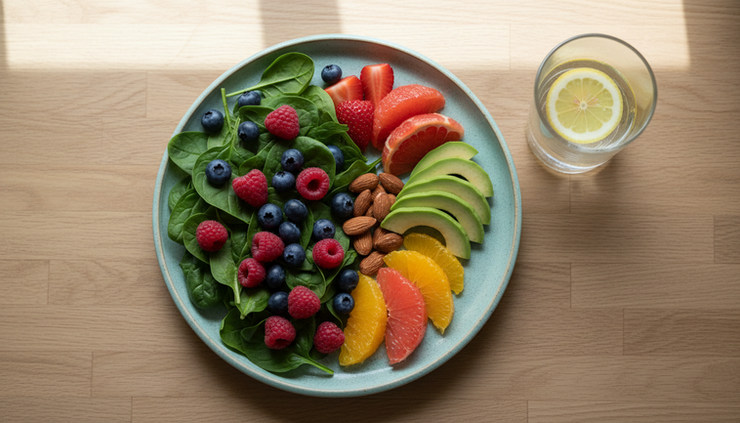
Eating a varied diet
Colourful fruit and vegetables provide antioxidant compounds, fibre, and micronutrients. Nuts, seeds, olive oil, legumes, wholegrains, and oily fish also support general health.
Prioritising sleep
Skin repair and barrier recovery can suffer when sleep is poor for long periods.
Avoiding smoking
Smoking is strongly linked with oxidative stress and visible skin ageing.
Managing repeated inflammation
Picking at breakouts, over-exfoliating, and using harsh products can create more irritation and lingering marks.
Being realistic with heat
Frequent high-heat exposure, including very hot showers, can worsen dryness and redness in some skin types.
These steps sound basic because they are. They also work best when repeated. Skin improvement usually comes from lower daily stress plus better daily support, not from one dramatic product change.
Building a skin routine that respects oxidative stress
A good routine does not need to be complicated. It needs to be consistent and suited to the skin in front of you.
Start with the non-negotiables:
Gentle cleanser
Moisturiser that supports the barrier
Broad-spectrum sunscreen every morning
Then add one treatment step if needed:
Vitamin C or another antioxidant in the morning
Niacinamide for barrier support and uneven tone
Retinoid at night for texture and ageing concerns, introduced slowly
Pigment-focused ingredients if uneven tone is the main concern
Avoid changing everything at once. If irritation appears, it becomes hard to know which product caused it. Add one new product, use it for a few weeks if tolerated, then decide whether it deserves a place.
Patch testing can help, especially for reactive skin. Apply a small amount to a limited area for a few days before using it widely. If skin stings, burns, swells, or develops a rash, stop and seek advice from a qualified health professional.
Professional advice can be useful when pigmentation, acne, rosacea, eczema, or ongoing sensitivity is involved. These concerns can look similar on the surface but need different care.
This article is for general information only and is not medical advice. For persistent, painful, changing, or worrying skin issues, speak with a GP, dermatologist, or qualified skin professional.
What to remember about oxidative stress and skin
Oxidative stress is part of skin biology, not a scare tactic. The goal is not to eliminate every free radical. The goal is to help skin keep its balance.
Sun exposure, pollution, stress, poor sleep, smoking, and irritation can all add pressure. Antioxidants, sunscreen, barrier care, and healthy daily habits help reduce that load. The most effective routine is usually the one that protects the skin in the morning, repairs and supports it at night, and avoids unnecessary irritation.
If the topic feels complicated, start with three simple moves: wear sunscreen, use gentle basics, and add antioxidants only when the skin is ready. That foundation gives skin a better chance to stay calm, resilient, and even-looking over time.


Comments