

How to Layer Active Ingredients Safely for Better Skincare Results
Good skincare can go wrong fast when too many strong ingredients land on the face at once. One serum promises glow, another targets breakouts, a night cream smooths texture, and before long the routine starts to sting, peel, or do nothing at all.
Active ingredients can deliver real benefits, but they work best when the skin barrier stays calm. The goal is not to use every popular ingredient in one routine. The goal is to use the right ingredients, in the right order, at the right pace.
This guide explains how to layer actives safely, which combinations make sense, and when to separate ingredients for better results. It is general skincare information only and does not replace advice from a GP, dermatologist, or qualified skin therapist, especially for acne, eczema, rosacea, pregnancy, prescription products, or ongoing irritation.

Start with what layering actually means
Layering is the order you apply products so each one can sit well on the skin. It usually follows a simple rule:
Apply from thinnest texture to thickest texture.
That means watery products go first, then gels and serums, then creams, then oils if used. Sunscreen always comes last in the morning.
A basic order looks like this:
Cleanser
Toner or essence, if used
Water-based serum
Treatment serum or cream
Moisturiser
Facial oil, if used at night
Sunscreen, in the morning only
This order helps products spread evenly. It also stops heavier creams or oils from blocking lighter serums.
Texture is only part of the story, though. Active ingredients need more care than basic hydrators. Some actives can make skin more sensitive. Some work better at different times of day. Some should not be introduced together, especially if the skin is already dry, tight, or reactive.
If layering skincare feels confusing, simplify the routine before adding more. Most people get better results from a consistent three or four-step routine than from a crowded shelf of half-used products.
Know the main active ingredients before combining them
Active ingredients are included because they do something specific. They may brighten, exfoliate, smooth, calm, hydrate, or reduce the look of congestion. The safest way to layer them is to understand their job.
Vitamin C helps brighten and support daytime protection
Vitamin C is often used in the morning because it supports a brighter-looking complexion and pairs well with sunscreen. It does not replace sunscreen, but it can sit underneath it as part of a daytime routine.
A simple morning routine may be:
Gentle cleanse or rinse
Vitamin C serum
Moisturiser
Broad-spectrum SPF
Vitamin C can tingle, especially stronger formulas. If the skin feels hot, itchy, or red, reduce use or pause it. People with sensitive skin may prefer using it every second morning at first.
Retinol supports texture and visible ageing concerns
Retinol belongs to the vitamin A family. It is commonly used for uneven texture, visible fine lines, and blemish-prone skin. It is usually best kept for night because it can make skin more sensitive, and many formulas are not ideal for daytime use.
Retinol should be introduced slowly. Start with two nights a week, then build only if the skin stays comfortable.
A beginner night routine may be:
Gentle cleanser
Lightweight hydrating serum
Retinol
Moisturiser
If dryness appears, use the “moisturiser sandwich” method. Apply moisturiser, then retinol, then another thin layer of moisturiser. This can soften the impact without removing retinol from the routine.
Hyaluronic acid helps hold water in the skin
Hyaluronic acid is a hydrating ingredient, not an exfoliant or resurfacing active. It works well with most ingredients and can help offset dryness from stronger actives.
Apply it to slightly damp skin, then seal it with moisturiser. If used on its own without a cream over the top, it may not feel as comfortable, especially in dry air or air-conditioned rooms.
A simple routine might include a vitamin C serum, retinol, and hyaluronic acid, whether products come from SkinCeuticals Australia, a pharmacy, a skincare Australia retailer, or a skin clinic such as Pt78 Skin and Body. The brand matters less than how the ingredients fit together.

Exfoliating acids smooth dullness and congestion
Alpha hydroxy acids, such as glycolic and lactic acid, mainly target surface dullness and texture. Beta hydroxy acid, usually salicylic acid, is oil-soluble and often used for clogged pores and blemish-prone areas.
These ingredients can be very useful, but overuse is one of the fastest ways to damage the skin barrier.
Signs of over-exfoliation include:
Stinging when applying simple products
Shiny, tight skin
Flaking or rough patches
Redness that does not settle
Breakouts that feel irritated rather than congested
Most routines do not need exfoliating acids every day. One to three times per week is enough for many people.
Niacinamide supports balance and barrier care
Niacinamide is a flexible ingredient. It can support the skin barrier, help with uneven tone, and reduce the look of excess oil. It usually layers well with vitamin C, retinol, acids, and hydrators.
Older advice often warned against using niacinamide and vitamin C together. Modern cosmetic formulas are generally made to be stable and compatible. If the combination irritates your skin, separate them, but there is no universal rule that they must never meet.
Use the right combinations and separate the risky ones
Some ingredients work well together. Others may be too much when used in the same routine. The risk usually comes from irritation, not from the products “cancelling each other out”.
Ingredient pairing | Best approach | Why it helps |
Vitamin C and sunscreen | Use in the morning | Vitamin C supports a brighter look, while SPF protects against UV exposure |
Retinol and moisturiser | Use at night | Moisturiser helps reduce dryness and supports the barrier |
Hyaluronic acid and most actives | Use morning or night | Hydration can improve comfort |
Niacinamide and retinol | Use together or on alternate nights | Niacinamide may help skin tolerate retinol better |
Exfoliating acids and retinol | Usually separate | Both can increase dryness and irritation |
Vitamin C and exfoliating acids | Separate if sensitive | The combination may sting or overwhelm the skin |
Benzoyl peroxide and retinol | Use with care or separate | Some combinations can be irritating, and certain forms may not layer well |
A safe routine is built around one main active per routine. That does not mean only one active in your whole life. It means avoiding a morning or evening routine packed with vitamin C, exfoliating acid, retinol, strong acne treatment, and peel pads all at once.
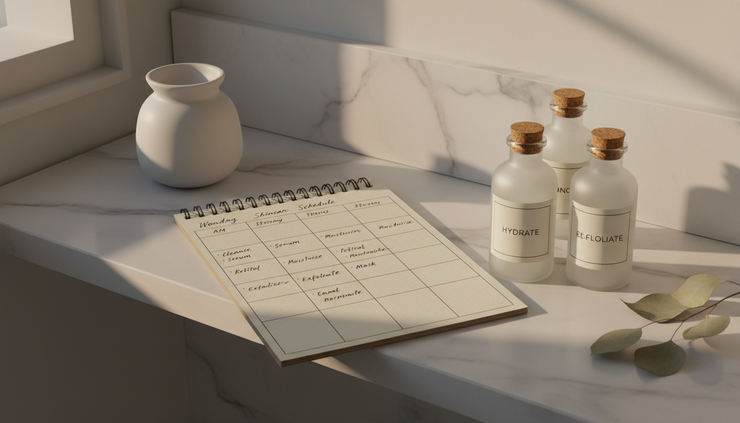
Try this rhythm instead:
Morning Focus on protection and antioxidants.
Night one Use retinol.
Night two Use hydration and barrier support.
Night three Use exfoliating acid.
Night four Rest and moisturise.
This kind of spacing gives the skin time to respond. It also makes it easier to see what is working.
Build a morning routine that protects the skin
Morning skincare should prepare the skin for the day. In Australia, daily sun protection matters because UV levels can be high even when the weather feels mild. Sunscreen is the non-negotiable final step if the skin will be exposed to daylight.
A balanced morning routine can be very simple:
Cleanse gently
Use a mild cleanser if the skin feels oily or has residue from night products. Dry or sensitive skin may only need a rinse.
Apply a hydrating layer
A light hyaluronic acid serum or essence can help keep the skin comfortable.
Use vitamin C if tolerated
Apply a few drops to dry skin. Let it settle briefly before moisturiser.
Moisturise if needed
Oily skin may prefer a gel cream. Dry skin may need a richer cream.
Finish with broad-spectrum sunscreen
Apply enough product and reapply as directed, especially outdoors, after sweating, or after swimming.
Do not rely on makeup with SPF as your only sun protection unless you apply enough to meet the labelled protection. Most people apply makeup much more thinly than sunscreen.
If sunscreen pills over serums, the routine may have too many layers. Try using less serum, allowing each layer to settle, or choosing a lighter moisturiser.
Build a night routine that treats and repairs
Night is the best time for most treatment steps. The skin does not need sunscreen at night, so the routine can focus on cleansing, treatment, and barrier care.
A simple retinol night may look like this:
Cleanse and dry the skin well.
Apply a hydrating serum if needed.
Apply a pea-sized amount of retinol to the face, avoiding the eye area unless the product is made for it.
Apply moisturiser.
A simple exfoliation night may look like this:
Cleanse.
Apply the exfoliating acid as directed.
Skip retinol.
Apply moisturiser.
A recovery night may look like this:
Cleanse.
Apply hyaluronic acid or a calming serum.
Apply moisturiser.
Add a facial oil only if the skin likes it.
Recovery nights are not wasted nights. They help the skin barrier stay strong enough to tolerate active ingredients over time.
The skin barrier is the outer layer that helps hold water in and keep irritants out. When it is disrupted, even gentle products can sting. This is why more actives do not always mean better results. Sometimes the product that improves results most is a plain moisturiser used consistently.
Add new actives one at a time
The biggest mistake is starting several new products in the same week. If irritation appears, there is no easy way to identify the cause.
Introduce one new active at a time and give it at least a couple of weeks before adding another. Some ingredients, such as retinol, can take longer to show visible changes. Patience matters.
Use this simple test before applying a new active all over the face:
Apply a small amount near the jawline or behind the ear.
Repeat for a few nights if the product is meant for regular use.
Watch for itching, swelling, burning, or a rash.
Stop if the reaction feels more than mild and brief.
A light tingle from some acids or vitamin C may be normal. Burning is not. Stinging that continues after moisturiser is a sign to pause.

Adjust the routine when the skin feels irritated
When skin becomes inflamed, strip the routine back. This is not a failure. It is how the skin tells you it needs fewer signals and more support.
For a few days, use only:
Gentle cleanser
Plain moisturiser
Sunscreen in the morning
Pause retinol, exfoliating acids, strong vitamin C, scrubs, masks, and fragranced products. Once the skin feels normal again, reintroduce one active at a time.
If irritation keeps returning, check the basics:
Are you using retinol too often?
Are exfoliating acids stacked with other strong actives?
Is the cleanser leaving the skin tight?
Are you skipping moisturiser?
Are you applying actives around the eyes or corners of the nose?
Are you using sunscreen every day?
The corners of the nose, mouth, and eyes are more prone to irritation. Applying a thin layer of moisturiser or balm to those areas before strong actives can reduce accidental spread.
Keep the routine simple enough to repeat
Great skincare is usually boring in the best way. The products make sense, the order is clear, and the skin is not constantly reacting.
A strong routine does not need ten steps. For many people, the best structure is:
Morning
Cleanse
Vitamin C or hydrating serum
Moisturiser
Sunscreen
Night
Cleanse
Retinol or exfoliating acid on selected nights
Moisturiser
Rest nights
Cleanse
Hydrating serum
Moisturiser
This gives the skin treatment, hydration, and recovery without crowding every routine.
The safest way to get better skincare results is to choose a goal, pick one active that supports it, and give the skin time to adapt. Brightening, smoothing, clearing, and firming all take consistency. They also depend on a healthy barrier.
Layer with care, separate strong actives when needed, and protect the skin every morning. Better results often come from doing less, but doing it well.


Comments