

How to Choose the Best Vitamin C Serum for Your Skin
Vitamin C serums all promise brighter, smoother, more even-looking skin. The catch is that the bottles can look similar while the formulas behave very differently.
Some sting. Some oxidise before you finish them. Some suit oily skin but feel too active on a compromised barrier. Others are beautifully made, but not the right match for what your skin needs right now.
Choosing well comes down to a few practical details: the form of vitamin C, the concentration, the supporting ingredients, the packaging, and how your skin tends to react. This guide breaks those details down so you can shop with more confidence and use your serum properly once it is on your shelf.
This article is general information only and does not replace advice from a dermatologist, GP, or qualified skin professional, especially if you have a skin condition, are pregnant, or use prescription actives.
Know what vitamin C can and cannot do
Vitamin C is best known as an antioxidant. In skincare, that means it helps defend the skin against free radical stress from sources such as UV exposure and pollution. It is not a sunscreen, and it does not replace SPF, but it can sit well in a morning routine under broad-spectrum sunscreen.
A well-formulated vitamin C serum may help with:
Dullness
Skin can look fresher and more luminous with regular use.
Uneven tone
Vitamin C may help soften the look of pigmentation and post-blemish marks over time.
Fine lines
Research suggests vitamin C can support collagen-related skin processes, which may improve the look of lines when used consistently.
Environmental stress
Antioxidant skincare can help reduce the impact of daily exposure to stressors such as UV and pollution.
What it will not do is transform skin overnight. Vitamin C is a long-game ingredient. Many people notice a brighter look first, while changes in uneven tone or texture take longer.
The other key point is that vitamin C can be irritating for some skin types. More active does not always mean better. The right serum is the one your skin can tolerate often enough to see results.
Match the vitamin C type to your skin
The ingredient list is the best place to start. “Vitamin C” can mean several different forms, and each one has a different feel, strength, and tolerance profile.
L-ascorbic acid suits resilient skin that wants visible results
L-ascorbic acid is the pure form of vitamin C and one of the most researched forms used in skincare. It is popular because it can be effective, especially when the formula is well made.
The trade-off is that it can be unstable and may irritate sensitive skin. L-ascorbic acid often performs best in a low-pH formula, which can feel tingly or sharp on application.
This type may suit skin that is:
Normal, combination, or oily
Used to active ingredients
Concerned with dullness, sun-related pigmentation, or early signs of ageing
Not currently irritated or barrier-damaged
If your skin often reacts to exfoliating acids, strong retinoids, or fragrance, start with caution.
Vitamin C derivatives are often gentler
Derivatives are forms of vitamin C that need to convert in the skin. They are usually less direct than L-ascorbic acid, but they can be easier to tolerate and more stable in a bottle.
Common derivatives include:
Sodium ascorbyl phosphate
Magnesium ascorbyl phosphate
Ascorbyl glucoside
Tetrahexyldecyl ascorbate
3-O-ethyl ascorbic acid
These may suit skin that is:
Sensitive or easily flushed
Dry or barrier-prone
New to active skincare
Unable to tolerate low-pH formulas
A derivative can still be worth choosing even if it sounds less powerful. Consistency matters. A gentler serum used regularly can outperform a strong one that sits unused because it stings.

Read the label like a skin professional
A vitamin C serum label can tell you a lot before you buy. Look beyond the claims on the front and check the type of vitamin C, concentration, support ingredients, packaging, and texture.
Check the concentration
Higher strength can sound tempting, but it is not always the smartest choice.
For L-ascorbic acid, many serums sit somewhere between lower beginner-friendly strengths and stronger cosmetic formulas. If your skin is sensitive, a lower concentration or a derivative is often a better place to start.
If you have used vitamin C before with no issues, a stronger L-ascorbic acid formula may be appropriate. Still, irritation is a sign to slow down, not push through.
For derivatives, concentration is harder to compare because each derivative behaves differently. A 10 per cent derivative does not equal a 10 per cent L-ascorbic acid serum in a direct way. In this case, the brand’s overall formula quality matters more than one number.
Look for supporting antioxidants
Vitamin C often works well when paired with other antioxidants and stabilising ingredients. Vitamin E and ferulic acid are common partners in L-ascorbic acid formulas.
You may also see ingredients such as:
Ferulic acid
Tocopherol or vitamin E
Phloretin
Resveratrol
Niacinamide
Green tea extract
Hyaluronic acid
Glycerin
Niacinamide can be a useful partner for uneven tone and barrier support. Hydrators such as glycerin and hyaluronic acid help make a formula feel more comfortable, especially for dry skin.
Well-known formulas such as SkinCeuticals C E Ferulic and Phloretin CF are often discussed because they pair vitamin C with other antioxidant ingredients. When comparing products across skincare Australia retailers, including clinics such as Pt78 Skin and Body, look at the whole formula rather than the headline ingredient alone.
Choose protective packaging
Vitamin C, especially L-ascorbic acid, can break down with exposure to light, heat, and air. Packaging matters.
Better options include:
Dark or opaque bottles
Air-restrictive pumps
Small bottles you can finish within a reasonable time
Droppers that close tightly and do not leak
Clear bottles are less ideal for unstable formulas unless the brand has used a more stable derivative or protective technology.
Watch the colour and smell
Some vitamin C serums start clear, pale straw, or light golden. If an L-ascorbic acid serum turns dark orange or brown, it may have oxidised. Oxidised vitamin C is less likely to give the result you bought it for and may be more irritating.
A slight metallic or hot-dog-like scent can occur in some ferulic acid formulas. That smell alone does not mean the product has gone bad. A strong rancid smell, a major texture change, or a much darker colour is a stronger warning sign.
Choose by skin type and concern
The best serum for one face can be completely wrong for another. Start with skin type, then refine based on the main concern.
Skin type or concern | What to look for | What to avoid |
Sensitive skin | Lower-strength vitamin C derivatives, fragrance-free formulas, barrier-supporting hydrators | Very low-pH L-ascorbic acid formulas if your skin stings easily |
Oily or acne-prone skin | Lightweight gels or watery serums, sodium ascorbyl phosphate, non-greasy textures | Heavy oil-rich formulas if they clog your pores |
Dry skin | Creamy or hydrating serums, glycerin, hyaluronic acid, vitamin E | Alcohol-heavy formulas that leave skin tight |
Pigmentation or sun spots | L-ascorbic acid or well-made derivatives, daily sunscreen, steady use | Expecting serum to replace SPF or professional pigment care |
Mature skin | Antioxidant blends, vitamin C with vitamin E and ferulic acid, nourishing textures | Harsh layering with too many strong actives at once |
Beginner routine | Gentle derivative, lower strength, simple ingredient list | Starting with the strongest serum available |
If your skin is sensitive
Pick a vitamin C derivative and use it every second or third morning at first. Apply moisturiser soon after. If your face feels hot, itchy, or tight, stop and let your barrier recover.
Sensitive skin often responds better to a slow routine than an ambitious one.
If your skin is oily or breakout-prone
Look for a thin serum that disappears quickly. Gel or water-based textures tend to layer better under sunscreen in humid Australian weather.
Avoid assuming oil means bad. Some oil-soluble vitamin C derivatives can suit many skin types, but if you know richer formulas clog your pores, choose lighter textures.
If pigmentation is your main concern
Vitamin C can be helpful, but sunscreen is non-negotiable. Australian UV levels can be high, and pigmentation can deepen with repeated exposure. Use vitamin C in the morning, then apply a broad-spectrum SPF as the final skincare step.
For stubborn melasma or dark patches, professional advice matters. Pigmentation has many triggers, including hormones, heat, inflammation, and sun exposure.
Use vitamin C the right way
Even the best formula can disappoint if it is used poorly. Vitamin C usually works best as part of a simple, consistent routine.
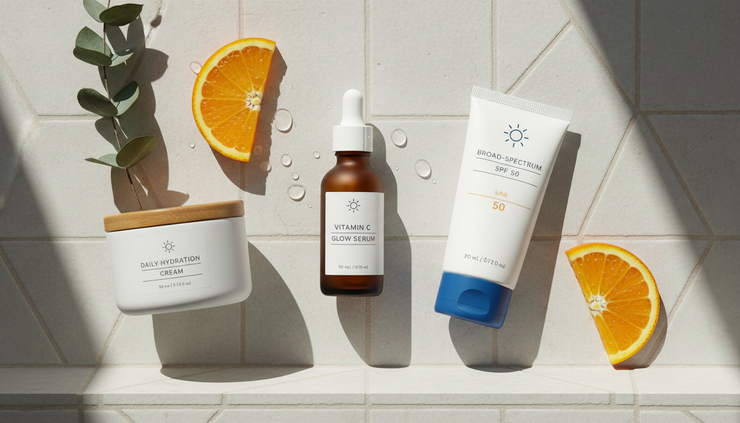
A basic morning order looks like this:
Cleanse or rinse
A gentle cleanse is enough. Avoid stripping the skin before applying actives.
Apply vitamin C
Use a few drops on dry skin unless the product directions say otherwise.
Add moisturiser if needed
This helps comfort dry or sensitive skin.
Finish with sunscreen
Use broad-spectrum SPF every morning, and reapply when needed.
Vitamin C can also be used at night, especially if your skin cannot tolerate it in the morning. The morning remains popular because antioxidant skincare pairs well with daytime environmental protection.
Introduce it slowly
Start two to three times a week. If your skin feels calm after a fortnight, increase to every second day, then daily if needed.
Signs you are going too fast include:
Stinging that lasts more than a minute or two
Redness that does not settle
Dry, shiny, tight skin
Flaking around the mouth, nose, or cheeks
Breakouts that look more like irritation than usual acne
A mild tingle can be normal with some L-ascorbic acid formulas. Burning is not.
Be careful with strong actives
Vitamin C can fit into a routine with retinoids, exfoliating acids, or benzoyl peroxide, but layering everything at once is where many people get into trouble.
If your routine already includes retinol or prescription retinoids, use vitamin C in the morning and retinoids at night. If you use exfoliating acids, keep them to separate days until you know your skin can handle the mix.
A simple routine often gives better results than a crowded one.
Decide when to spend and when to save
Price does not prove a serum will work, but very cheap L-ascorbic acid formulas can be risky if the packaging, stability, or product information is poor.
Spend more when:
You want a well-studied L-ascorbic acid formula
The product uses protective packaging
The brand explains the vitamin C form and supporting ingredients clearly
You have specific skin goals such as pigmentation, dullness, or photoageing
You will use the serum consistently before it expires
Save when:
You are new to vitamin C
You have sensitive skin and need a gentle derivative
You are still learning which texture suits you
Your main goal is a simple glow boost rather than targeted pigment care
The best vitamin C serum Australia shoppers can choose is not only the one with the strongest reputation. It is the one that suits Australian sun exposure, your skin tolerance, your budget, and your willingness to use sunscreen daily.
A simple checklist before you buy
Before adding a serum to cart, run through this quick check.
Vitamin C form
L-ascorbic acid for a stronger, more researched option. A derivative for a gentler start.
Skin fit
Match the formula to your tolerance, not just your goal.
Packaging
Choose opaque, dark, or air-protective packaging where possible.
Supporting ingredients
Look for antioxidants, hydrators, or barrier-friendly ingredients that suit your skin.
Texture
Pick something you will enjoy wearing under sunscreen.
Freshness
Avoid old stock, poor storage, or formulas that arrive darkened or changed.
Routine compatibility
Make sure it fits with your retinoids, acids, moisturiser, and SPF.
Vitamin C is worth the attention because the right serum can make a routine feel more polished and effective. Start with your skin, not the marketing claim. Choose a formula that makes sense on the label, introduce it slowly, and protect your results with sunscreen.
That is how a vitamin C serum earns its place on the bathroom shelf.


Comments